
Buying your first Bitcoin can feel intimidating, but the process is straightforward once you understand how exchanges work and how to protect yourself. Cryptocurrency has moved from a niche experiment to a mainstream asset held by hundreds of millions of people worldwide, yet the same beginner mistakes cost newcomers money every day. This guide walks you through choosing a safe crypto exchange, making your first purchase, storing your coins securely, and avoiding the traps.
What a crypto exchange does
A cryptocurrency exchange is a platform where you convert regular money — such as US dollars, euros, or your local currency — into digital assets like Bitcoin or Ethereum, and back again. Think of it as the on-ramp between the traditional financial system and the crypto world. A good exchange verifies your identity, lets you fund your account securely, executes your trades at fair prices, and keeps the majority of customer funds in secure storage.
Exchanges broadly fall into two types. Centralised exchanges are run by companies that hold your funds and make buying easy — the best choice for beginners. Decentralised exchanges let you trade directly from your own wallet without an intermediary, offering more control but requiring more technical knowledge.
How to choose a safe exchange
Your choice of exchange is the most important security decision you will make as a beginner. Prioritise these factors:
- Regulation and licensing: prefer exchanges registered or licensed in reputable jurisdictions that follow know-your-customer (KYC) rules. Regulation is not a guarantee, but it adds accountability.
- Security track record: look for two-factor authentication, the cold (offline) storage of customer funds, and a history free of unresolved hacks.
- Fees: compare trading fees, deposit and withdrawal fees, and the spread between buy and sell prices. Small percentages compound over time.
- Local payment support: confirm the exchange supports your currency and a funding method you can actually use, such as bank transfer or card.
- Liquidity: larger, well-established exchanges make it easier to buy and sell quickly at fair prices without large slippage.
Buying your first Bitcoin, step by step
The process is simpler than most beginners expect:
- Create an account and complete identity verification. This is legally required on regulated platforms and protects you as much as the exchange.
- Deposit funds using your chosen method. Bank transfers are usually cheaper than card payments.
- Place an order. A “market” order buys instantly at the current price; a “limit” order only executes at a price you set in advance.
- Start small. Buy an amount you can comfortably afford to lose while you learn how everything works.
You do not have to buy a whole Bitcoin — every coin is divisible into tiny fractions, so you can start with a modest amount.
Storing your crypto safely
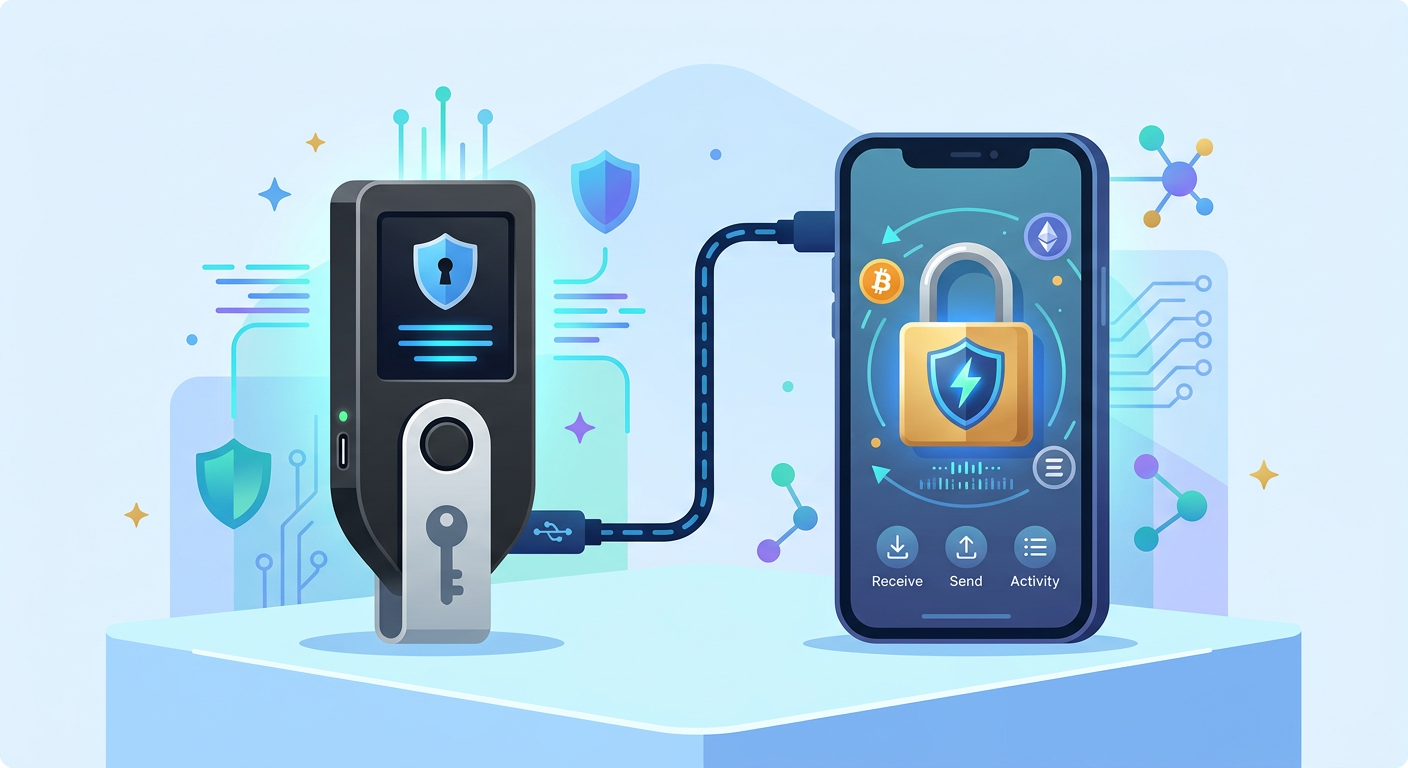
Leaving large amounts on an exchange means trusting that company with your funds. For meaningful holdings, many people move their crypto to a personal wallet. A hot wallet is a convenient app connected to the internet, good for small amounts you use often. A cold wallet is a hardware device kept offline, offering the strongest protection for long-term holdings.
Whichever you choose, write down your recovery phrase on paper, store it somewhere safe and private, and never share it or type it into a website. Anyone who has that phrase controls your coins — no bank can reverse the transfer if they steal them.
Common beginner mistakes
Avoid investing money you need for essentials, and never borrow to buy crypto. Do not chase a coin simply because its price is rising quickly — that is often when the risk is highest. Ignore unsolicited messages promising free crypto, guaranteed returns, or “doubling” schemes; these are almost always scams. Finally, expect volatility: prices can swing sharply in both directions within a single day, and that is normal for this market.
Understanding market volatility
Volatility — the tendency of prices to move sharply and quickly — is the single most important thing for a beginner to accept about cryptocurrency. It is normal for a coin to rise or fall by double-digit percentages within days, or even hours. This happens because the market is relatively young, sentiment-driven, and traded globally around the clock without the circuit breakers found in traditional stock exchanges.
The practical lesson is to invest in a way that lets you sleep at night. Many long-term investors use a strategy called cost averaging: instead of investing a lump sum all at once, they buy a fixed small amount at regular intervals. This smooths out the price you pay over time and removes the pressure of trying to guess the perfect moment to buy. Whatever approach you take, never invest money you may need soon, because you might be forced to sell during a dip.
Beyond Bitcoin: other major coins
Bitcoin is the original and best-known cryptocurrency, often treated as digital gold — a store of value. But the ecosystem is much larger:
- Ethereum powers a vast network of applications and “smart contracts,” making it more like a platform than simple digital money.
- Stablecoins are designed to hold a steady value, usually pegged to a currency like the US dollar, and are widely used for saving and transferring value without the wild price swings.
- Thousands of smaller coins exist, ranging from serious projects to pure speculation. The smaller and newer a coin, the higher the risk — and many fail completely.
For beginners, sticking to the largest, most established coins is generally wiser than chasing obscure tokens promising huge gains.
Tax and record-keeping basics
In many countries, buying, selling, or spending cryptocurrency can have tax consequences, and rules vary widely. Even if you are just starting out, build the habit of keeping clear records: the date of each transaction, the amount, the price at the time, and any fees. Most exchanges let you download a transaction history, which makes this far easier.
Good record-keeping protects you in two ways. It ensures you can meet any tax obligations accurately, and it gives you a clear picture of how your holdings are actually performing once fees and price changes are accounted for. When in doubt about your local rules, consult a qualified tax professional rather than guessing — the small cost of advice can prevent much larger problems later.
How to spot and avoid crypto scams
The same qualities that make cryptocurrency exciting — fast, global, irreversible transactions — also make it a favourite tool for scammers. Learning to recognise the common tricks protects your money more than any trading skill. Watch for these red flags:
- Guaranteed returns: no legitimate investment can promise fixed profits. Anyone guaranteeing daily or weekly gains is running a scam.
- “Giveaways” that ask you to send first: messages promising to double any crypto you send are always fraudulent. You will never get anything back.
- Pressure and urgency: scammers push you to act immediately so you cannot stop and think. Genuine opportunities do not vanish in minutes.
- Fake support staff: criminals impersonate exchange support in chats and social media, then ask for your password or recovery phrase. Real support never needs those.
- Unsolicited investment “advisors”: strangers who contact you with a can’t-lose tip are almost always part of a scheme.
Adopt a few firm rules. Never share your recovery phrase or private keys with anyone, for any reason. Only download wallet and exchange apps from official sources, and double-check website addresses, since fake look-alike sites are common. Before sending crypto to any new address, verify it carefully — transactions cannot be reversed once confirmed.
Thinking long term
Beyond avoiding scams, the healthiest mindset for a beginner is patience. The people who lose the most are usually those chasing quick riches, trading on emotion, or investing money they cannot afford to lose. Treat crypto as one small, high-risk part of a broader financial plan, not a lottery ticket. Keep learning steadily, secure your holdings properly, and let time rather than hype guide your decisions. A calm, informed approach will serve you far better than any tip promising to make you rich overnight.
Frequently asked questions
How much money do I need to start?
Very little. Because Bitcoin and most coins are divisible into tiny fractions, you can begin with a small amount you are comfortable losing while you learn.
Are crypto exchanges safe?
Reputable, regulated exchanges with strong security are reasonably safe for buying and selling, but no platform is risk-free. For larger holdings, moving coins to your own wallet reduces your reliance on any single company.
What is a recovery phrase?
It is a list of words that acts as the master key to your wallet. Anyone with it can access your funds, so store it offline and never share it. Losing it can mean losing your crypto permanently.
Should I invest a lot at once?
Most beginners are better served starting small and learning steadily. Only commit money you can afford to lose, given how volatile the market is.
Bottom line
Choose a regulated exchange with a strong security record, start with a small amount, secure your recovery phrase offline, and treat crypto as a high-risk part of your finances rather than a guaranteed win. The careful habits you build now will protect you far more than any hot tip ever could.
Cryptocurrency is highly volatile and this article is for general information only, not investment advice. Never invest more than you can afford to lose.